
You Should Not Have to Own Property to Matter in the Property Economy
By Harold Heard · November 7, 2026
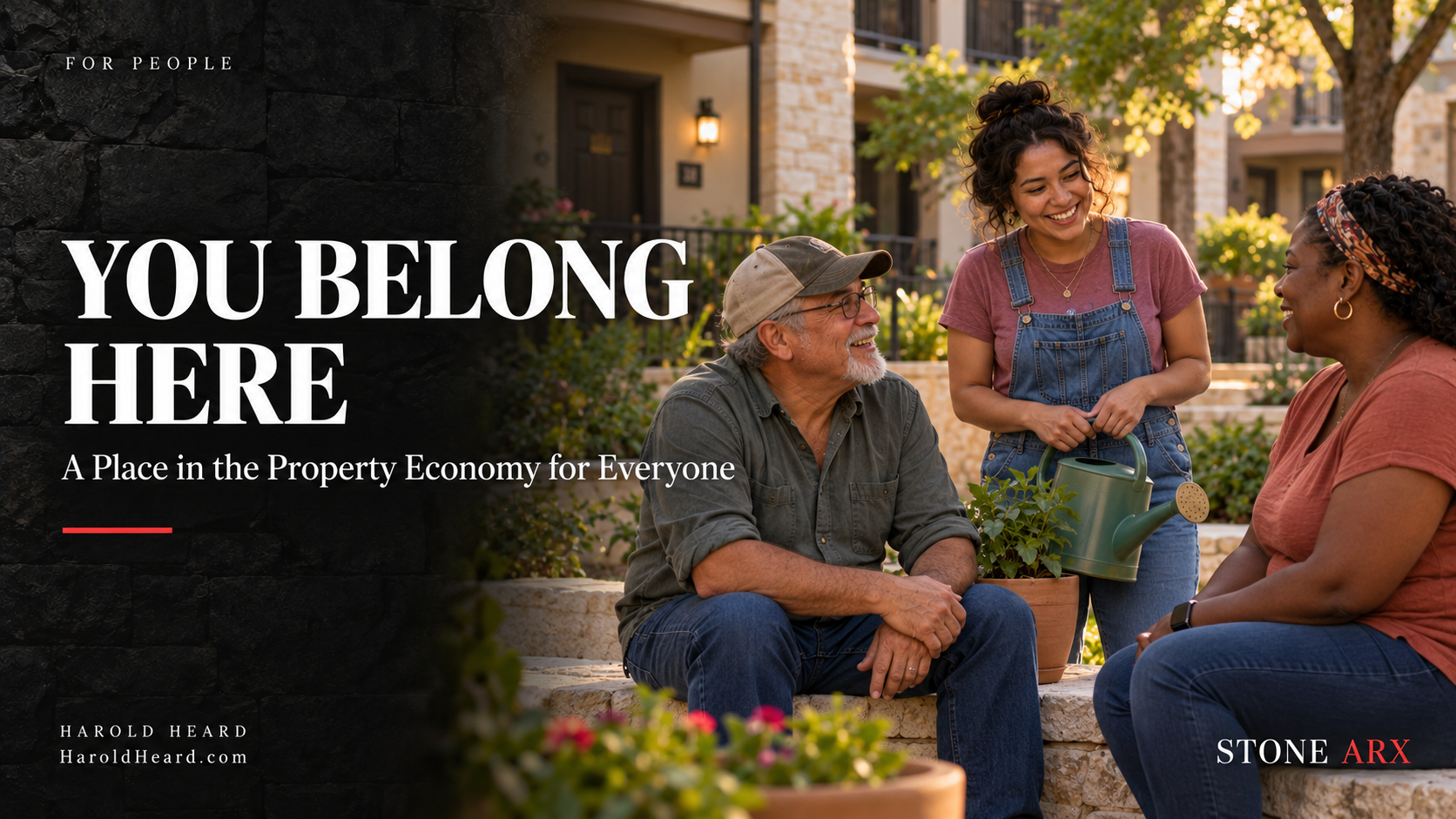
For People: What Nehemiah Teaches Me About Building Stone ARX | Article 11 of 13
A renter's relationship with a home matters on the day they move in, throughout the time they live there, and when they leave.
It does not need to become a purchase to deserve attention.
That belief is part of Stone ARX's broader purpose. People participate in the life of property through living, working, maintaining, financing, improving, and caring for it. Their importance cannot be measured only by whether they hold title or are about to complete a transaction.
Someone may rent an apartment for decades. A small business may operate from leased space. A family member may help an older relative manage a home. A service provider may know the history of a building better than anyone currently involved in its sale. Each relationship carries useful knowledge, practical needs, and boundaries that deserve consideration.
Nehemiah 11 concerns the people who inhabit and sustain the rebuilt city and the surrounding communities. The account includes settlement by lot, recognition of volunteers, and the people carrying everyday responsibilities. I draw an application about the life a built environment must support. Stone ARX's own participation should be voluntary, with people choosing to engage because the service is useful to them. (Nehemiah 11)
A connected property environment should give people reasons to participate that match their actual lives. For a renter, that might be a more understandable service request, access to permitted condition records, or a clear account of what was agreed and completed. Those outcomes have value even if the person never becomes a homeowner.
Consider someone moving into a rental home. They notice a condition they want documented. Later, a repair is requested and completed. Over time, there may be photographs, messages, access arrangements, provider records, and decisions about follow-up work.
The resident needs an understandable history of their own participation. The owner or manager needs information relevant to the property's care. A provider needs the scope of the task and appropriate access to perform it. The information required by each person will overlap in some places and remain separate in others.
Stewardship means helping those relationships function without treating one participant's convenience as authority over everyone else's information.
A renter's private circumstances should not become general property information merely because they live at an address. An owner's responsibilities should remain clear. A provider should receive the information needed to complete the work. Where a decision requires a particular person's approval, the process should identify that person rather than assume the most visible account holder can decide everything.
People also occupy several roles at once. Someone can rent the home they live in, own a small parcel of land, and work as a licensed professional. A person may act on behalf of an organization in one situation and as an individual in another.
The appropriate authority belongs to the relationship and task. We need to preserve that distinction while making the overall experience understandable enough for ordinary people to use.
This broader view changes what we should consider valuable activity. A resident who returns to check on a maintenance request is engaged in real work. A small provider supplying a permitted result is making a contribution. A public employee helping someone find the responsible office is supporting the life around the property.
The service should recognize those contributions through dependable handoffs, clear information, and appropriate acknowledgment. People should not have to become sales prospects to receive useful attention.
There is also an economic dimension. Owners and renters may contribute information that supports a legitimate opportunity. Any participation must respect the authority actually held, the interests of other people, and the terms of the proposed use. Being invited to consider an opportunity does not establish eligibility or guarantee income.
The person's ability to decline remains essential. Someone seeking a repair, an explanation, or help with a record should not feel that unrelated commercialization is the price of being treated as a valued participant.
For Stone ARX, belonging has to include the person whose information produces no revenue. It must include the person who wants privacy, the person with a small service need, and the person whose circumstances require additional explanation.
Practical access matters too. A service may look clear to someone accustomed to digital tools and remain difficult for another person. A household may share a device. Someone may need a different language or help from an authorized representative. A person may understand the property issue well while finding the online process unfamiliar.
Those experiences should inform how we design assistance. We can learn where a person gets stuck, simplify the next step, and preserve an appropriate route to human help. Accessibility is part of whether a service can accomplish its intended purpose for the people it welcomes.
The same respect should extend to professionals and smaller businesses. A capable local provider may already use a trusted system. A county office may have its own records and responsibilities. A broker may need to preserve confidential work within an existing environment.
Useful participation can involve an appropriate request, an attributable result, or a permitted handoff. We should develop ways for those contributions to fit together without assuming every organization must move all its work into Stone ARX.
This is part of the direction of the company, with services developed and described according to their actual availability. A broad vision brings a responsibility to be clear about whom a current offering serves and what work it can complete.
My faith informs why people matter to me before they become economically valuable to a business. That conviction has to become visible in the choices we make about service, support, and whose experience receives attention.
I want owners and renters to recognize themselves in Stone ARX. I also want the people who help care for property to see a useful place for their contribution. The common ground is the work that needs to happen and the people who depend on it.
If you rent, own, work in, or help care for property, I invite you to visit Stone ARX and sign up. Tell us what a continuing relationship with useful information and services would make easier in your life.
A property economy serves people more fully when their standing continues between transactions, across different kinds of tenure, and through the ordinary responsibilities of making a place their own.
If the Mandate Matters, Begin the Conversation
If your organization is preparing for a major transformation, evaluating its technology leadership, establishing an AI agenda, building a new platform, or seeking an experienced executive who can connect vision with execution, Harold welcomes a confidential conversation.